
Area Codes Serving Chapel Hill
Chapel Hill is served by the 919 and 984 area codes. The older and more familiar code is 919, which still appears across Town of Chapel Hill offices, Chapel Hill-Carrboro City Schools, UNC-Chapel Hill, public safety, transit, library, and many long-standing local landline numbers. The 984 code is an all-services overlay for the same region. It is not a separate Chapel Hill suburb code, and it is not limited to Raleigh or Durham.
The useful local rule is simple: both codes can serve the same Chapel Hill address, business, agency, or mobile user. A new phone line, VoIP account, health-care number, or field staff mobile can receive 984 while the next desk uses 919. Coverage and geography are the core questions for area-code research; N11 and star-code dialing belong to the broader phone-code system.
| Area Code | Coverage | Year Assigned | Overlay Status |
|---|---|---|---|
| 919 | Historic Triangle code serving Chapel Hill, Carrboro, Raleigh, Durham, Cary, Hillsborough, Pittsboro, and nearby east-central North Carolina communities. | 1954 | Primary historic code in the 919 / 984 overlay. |
| 984 | Same geography as 919, including Chapel Hill landline, wireless, VoIP, business, health-care, and government assignments. | 2012 | All-services overlay activated for new assignments. |
| 704 | North Carolina's original statewide code before the Triangle moved into 919. | 1947 | Historical parent context only, not current for Chapel Hill. |
Chapel Hill Area Code Map
Every Chapel Hill neighborhood and ZIP area uses the same 919 / 984 overlay. Downtown Chapel Hill, UNC-adjacent areas, Meadowmont, Ephesus, east Chapel Hill, southern Chapel Hill, Carrboro-adjacent blocks, and Orange County offices serving Chapel Hill all sit inside the same code pair. Moving from central Chapel Hill to the 27517 corridor does not move a caller into a different area-code territory.
The NANPA area-code map resource is the national source for current area-code geography.
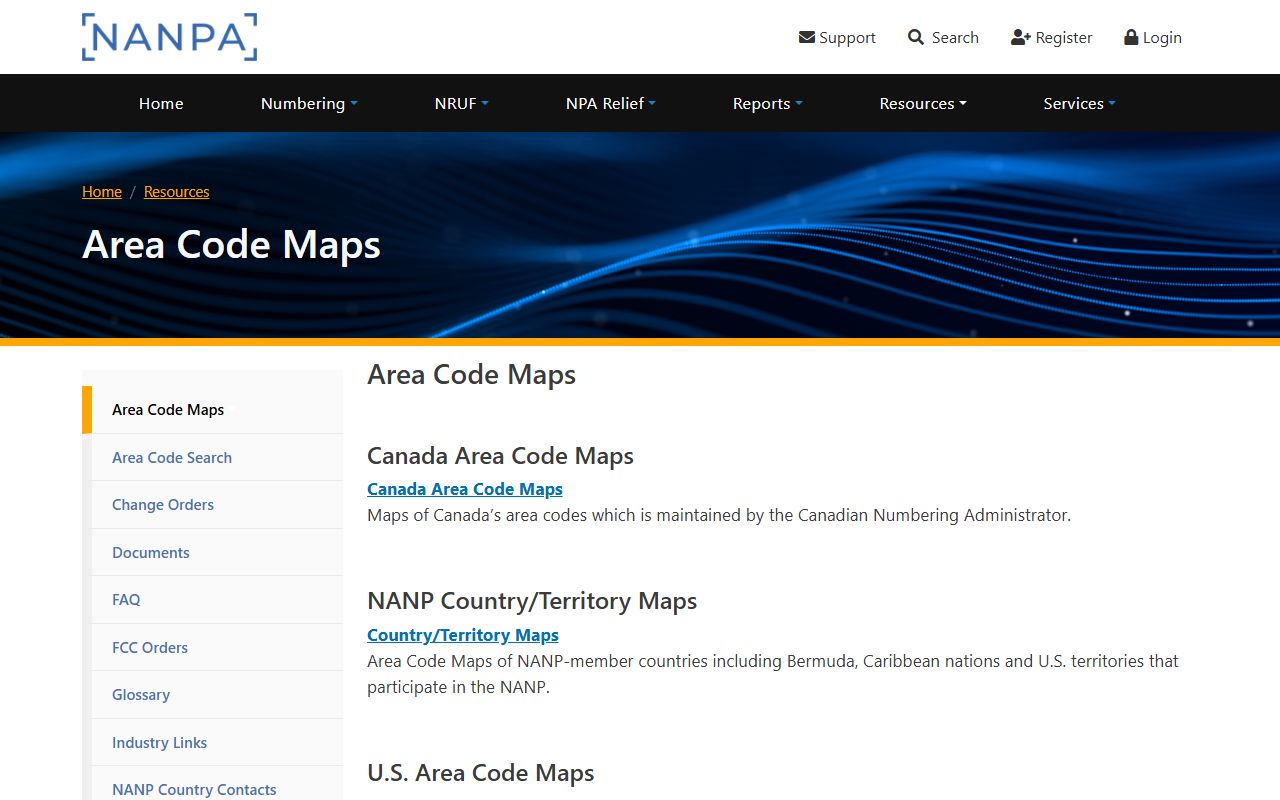
The NANPA reference is useful for confirming that 919 and 984 are part of the official North American Numbering Plan, not local marketing labels.
- Downtown, UNC campus, and 27514 - 919 and 984 share the same local area-code coverage.
- Southern and central Chapel Hill, including 27516 - Town, school, transit, and residential lines can use either code.
- East Chapel Hill, Meadowmont, and 27517 - business, health, and residential numbers remain in the 919 / 984 overlay.
- Carrboro-adjacent Chapel Hill - school, fire, social-service, and civic numbers share the same overlay.
- Orange County offices serving Chapel Hill - most published county numbers remain 919, but the overlay still applies.
Chapel Hill Overlay Definitions
Chapel Hill experienced the overlay model, not a new geographic split. In a split, one part of a former area keeps the old code while another part receives a new code. In an overlay, a new code is added on top of the same territory. Existing 919 users kept their numbers, while new numbers could be assigned 984 as the Triangle needed more numbering resources.
This distinction matters for local research. A 984 number can be a Chapel Hill number. A 919 number can be outside Chapel Hill. The area code gives a regional clue, but it does not prove the exact city, agency, carrier, or current owner because numbers can be ported between providers.
- NPA
- Numbering Plan Area, the three-digit area code at the start of a North American number.
- NXX
- The three-digit prefix after the area code, often more useful for Chapel Hill institutional clues.
- Overlay
- A second area code added to the same geography, with existing numbers unchanged.
- Split
- A boundary change that moves part of an old area-code region into a new code.
- Rate center
- A telephone-billing geography tied to prefixes and local calling data.
Chapel Hill Area Code Dialing
Local calls in Chapel Hill require the area code plus the seven-digit number. Ten-digit local dialing became mandatory in the 919 / 984 overlay on March 31, 2012, after a permissive dialing period that began in 2011. The change was needed because two area codes now serve the same local calling area.
Important: Chapel Hill local calls require ten digits. Seven-digit local dialing stopped working when the 984 overlay became mandatory in 2012.
Domestic long-distance dialing may require 1 plus the ten-digit number, depending on the carrier and service plan. The full set of Chapel Hill phone codes covers N11 service codes, star codes, toll-free prefixes, +1 country-code dialing, and international dialing formats.
Chapel Hill Area Code History
Chapel Hill's area-code history starts before 919. North Carolina was first assigned 704 in the original North American Numbering Plan. The Triangle region moved into 919 in 1954, giving Chapel Hill the code that still functions as a local identity marker. Later splits reduced the size of 919 elsewhere in North Carolina, while Chapel Hill stayed tied to the Triangle code.
The 984 overlay was approved earlier but deferred after number-pooling measures slowed number exhaustion. By 2011 and 2012, growth in the Research Triangle, mobile phones, fax lines, institutional systems, and VoIP demand made the overlay necessary. The state used an overlay rather than forcing existing Chapel Hill 919 users to change area codes.
Local phone history also has a physical Chapel Hill anchor. Open Orange documents the Rosemary Street Telephone Exchange Building at 207 E. Rosemary St., built in 1927 for the UNC and Chapel Hill telephone exchange and expanded in 1958 as switching equipment and telephone ownership grew. That history explains why local prefixes can still feel tied to older institutions even though modern numbering is portable.
| Year | Event |
|---|---|
| 1947 | North Carolina received 704 under the original numbering plan. |
| 1954 | 919 split from 704 and became the long-standing Triangle code for Chapel Hill. |
| 2001 | 984 overlay planning was approved, then deferred after number pooling helped conserve 919 numbers. |
| 2011 | North Carolina began 984 overlay implementation and permissive ten-digit dialing. |
| 2012 | Ten-digit local dialing became mandatory, and 984 became available for new assignments. |
Chapel Hill Area Code Prefixes
NXX prefixes are the three digits after the area code. In Chapel Hill, they often carry stronger local meaning than the area code itself. Town of Chapel Hill numbers heavily use 919-968 and 919-969. Chapel Hill-Carrboro City Schools has many 919-967, 919-942, 919-929, and 919-918 numbers. UNC-Chapel Hill is strongly associated with 919-962 and 919-966, while UNC Health uses 984-974 on many published numbers.
The Local Calling Guide 919 prefix search shows Chapel Hill rate-center and NPA-NXX data for technical checks.
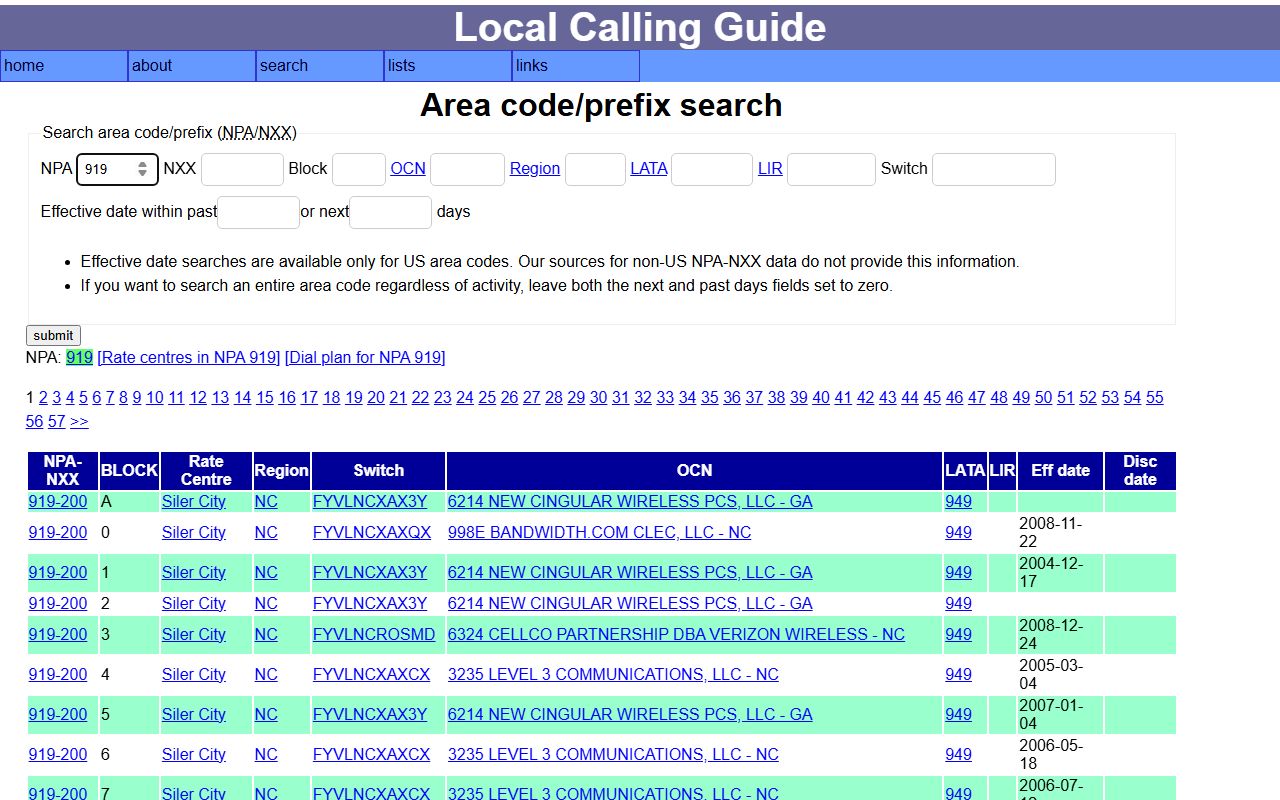
Prefix research should be treated as a clue. Thousand-block pooling, number portability, wireless service, and VoIP can separate a number's current user from its original prefix assignment.
Note: Use official Town, county, CHCCS, UNC, or UNC Health directories when identity matters more than area-code context.
Future Chapel Hill Area Codes
The research file did not identify a new planned relief code for Chapel Hill beyond the current 919 / 984 overlay. NANPA relief planning and North Carolina Utilities Commission materials are the right sources when a future overlay is proposed. For now, the operational rule remains that 919 and 984 both serve Chapel Hill, and residents do not need to change existing numbers.
The North Carolina Public Staff's 919 / 984 exchange-boundary map is a state-level reference for the overlay region. The Federal Communications Commission's ten-digit dialing guide explains why overlays usually require callers to include the area code for local calls.
Verify Chapel Hill Area Codes
Area-code verification should start with official numbering sources, then move to local directory sources. NANPA confirms area-code geography and national numbering plan status. North Carolina Utilities Commission and Public Staff materials show the state role. Local agency directories then confirm whether a specific Chapel Hill number is currently published for a Town office, school, university unit, county service, or health-care department.